Mature Trees Removed Before Site Work Starts
Tree removal in Millville for residential properties and development sites where standing trees are blocking demolition, construction, or clearing progress
Standing trees—whether a single mature specimen near a structure or a cluster spread across a development parcel—must be removed before grading, demolition, or foundation work can proceed. The residential areas around Millville and the broader shore communities have a significant number of properties with mature trees that were planted or established decades ago, many now positioned directly in the path of planned improvements. JMJ Contracting removes trees of all sizes across residential properties and development sites, integrating that work with the land clearing, brush hogging, and stump extraction operations that typically follow on the same project.
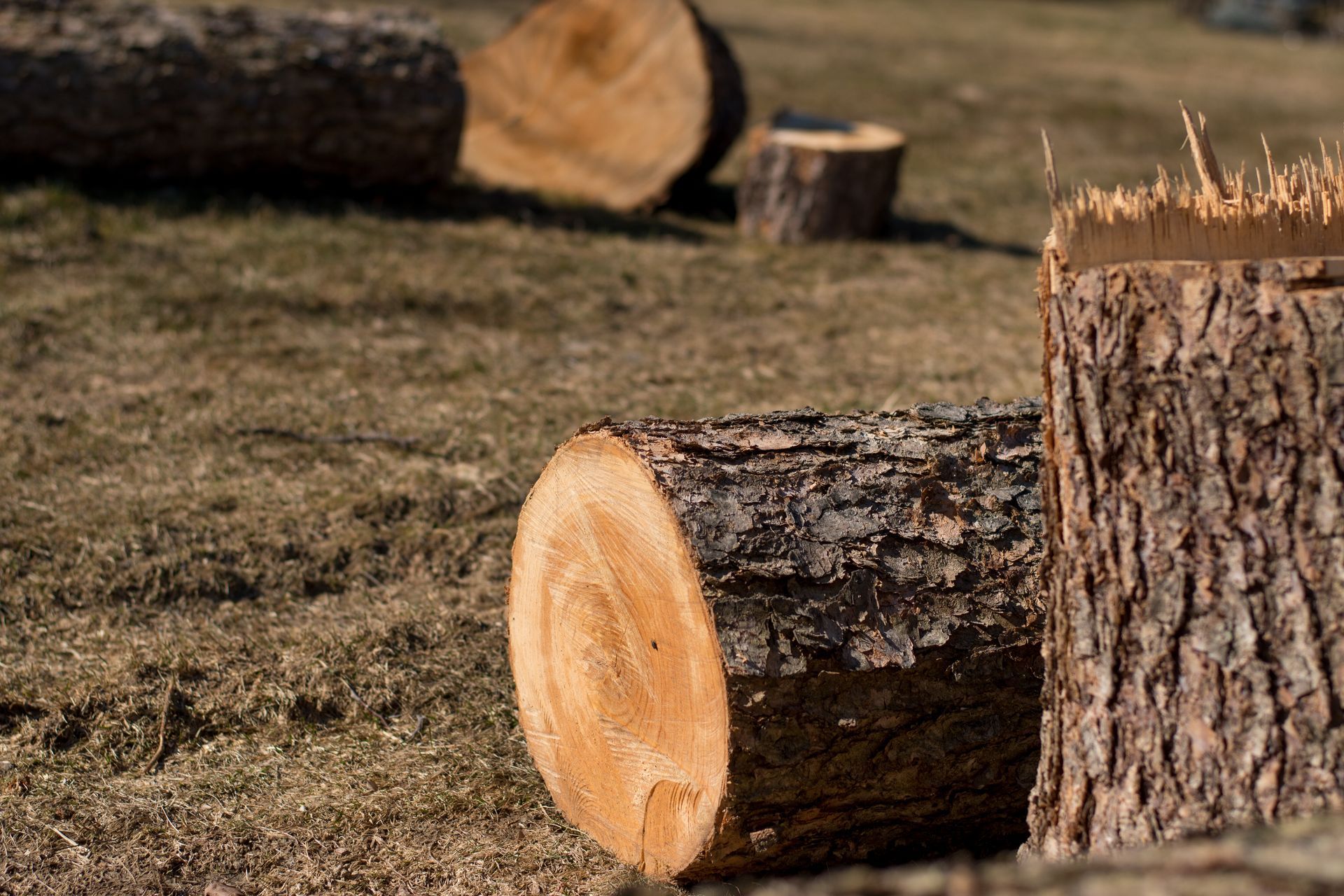
Full tree removal includes trunk felling, limb processing, and stump extraction—the complete scope, not just the above-grade portion. Leaving stumps in place creates obstacles for grading equipment and, depending on species, can produce persistent root sprouting that complicates future landscaping or surface work. On multi-tree sites, JMJ Contracting uses an equipment-based approach that handles volume more efficiently than manual crew methods, which matters when a development lot has dozens of trees to clear before grading can begin. The removal sequence is planned based on site access, proximity to structures, and how cleared material will be staged or processed.
Request an on-site review to assess tree positions, access constraints, and how removal fits into the broader sequence of work planned for your property.
Tree removal at the most basic level means getting the trunk and canopy down—but what remains below grade determines how usable the site is afterward. Stump extraction removes the root ball and primary lateral roots, which matters for grading accuracy and for any future paving, foundation work, or planting that happens in the same footprint. On development projects, incomplete extraction shows up as ground irregularities and equipment resistance during grading, adding time and cost to a phase of work that should be straightforward after clearing is done. JMJ Contracting's integration with land clearing operations means stump removal is treated as part of the same workflow, not a separate return visit.
After full removal and extraction, the cleared area is workable by grading equipment without the obstacles—visible and sub-surface—that standing trees and remaining stumps create. You'll notice the ground in formerly treed areas is consistent and accessible, with no protruding root masses or trunk bases that require equipment to navigate around during subsequent site work. Where multiple trees are removed across a large parcel, the cleared footprint becomes continuously accessible rather than broken up by obstacles at irregular intervals.
Tree removal near structures, utility lines, or fencing requires a different approach than removal on open land—felling direction, rigging, and debris staging must account for what surrounds the tree, and those conditions are assessed before the first cut is made rather than managed reactively during the work.
What Property Owners Usually Ask
These questions reflect what property owners and developers in Millville typically ask when tree removal is part of a larger site preparation or development project.
What does full tree removal include versus just felling the trunk?
Full removal includes felling, limb processing, and stump extraction—felling alone leaves a stump and root system in place that can obstruct grading work and produce regrowth depending on the species involved.
How does tree removal integrate with other site clearing work?
On properties that also need brush hogging, forestry mulching, or grading, JMJ Contracting sequences tree removal first so equipment can access the full site without working around standing trees during subsequent clearing phases.
Why does the removal approach change near structures or utilities?
Trees adjacent to buildings, fences, or overhead lines can't be felled in a standard direction—those situations require controlled sectional removal or rigging to direct each piece away from the obstruction, which affects both time and equipment needs.
What happens to the wood and debris after removal?
Depending on the property and project scope, removed material can be processed on-site through forestry mulching equipment, chipped, or staged for haul-off—the approach is confirmed based on the end-use requirements for the cleared area.
When should tree removal be scheduled relative to other development work in Millville?
Tree removal is the first step—it needs to happen before grading, demolition, or foundation work so that ground access is clear and sub-surface conditions can be accurately assessed across the full site footprint.
JMJ Contracting handles tree removal as part of a complete land management scope, connecting it directly to brush clearing, stump extraction, and grading work on the same project timeline. Talk with JMJ Contracting about your site's tree conditions and how removal fits into the preparation sequence for your planned improvements.