Dense Brush Processed Without Hauling Costs
Forestry mulching in Millville for brush-heavy and wooded lots where haul-off volume makes conventional clearing cost-prohibitive
Dense woodland lots and overgrown residential properties along the shore require a different clearing approach than open land—conventional cutting and hauling generates enormous debris volume, multiplying both time and cost. JMJ Contracting operates forestry mulching equipment that processes trees and brush directly on-site in a single pass, reducing standing vegetation to a reusable mulch product without the repeated haul cycles that drive up conventional clearing costs. That mulch stays on-site per the property owner's specifications or is removed if the end use of the land requires a clean surface.
The forestry mulching grinder works through material in a single-pass operation—the machine drives through vegetation, and the cutting drum reduces trees and brush to ground-level mulch behind it. On a typical one-acre clearing job, this approach compresses what would otherwise be a multi-day haul-off operation into a significantly tighter timeline. The mulch product left on-site serves as ground cover that suppresses regrowth and reduces erosion during the period between clearing and final site development, which is a relevant consideration on shore-area properties where exposed sandy soils can shift quickly after vegetation is removed.
Arrange a property walkthrough to assess vegetation density and determine whether on-site mulching or removal of the mulch product better fits your end-use plan.
Conventional brush clearing involves cutting, chipping or bucking material into manageable pieces, loading those pieces, and hauling multiple loads off-site—each step adds labor time and equipment hours. Forestry mulching consolidates cutting and processing into one machine pass, eliminating the load-and-haul cycle entirely for properties where the mulch can remain on-site. On larger parcels, this difference is most visible in the number of mobilization days required to reach a cleared, graded-ready condition. JMJ Contracting integrates forestry mulching into the broader land clearing workflow, meaning the same project can move from brush removal through to grading without a gap between scopes.
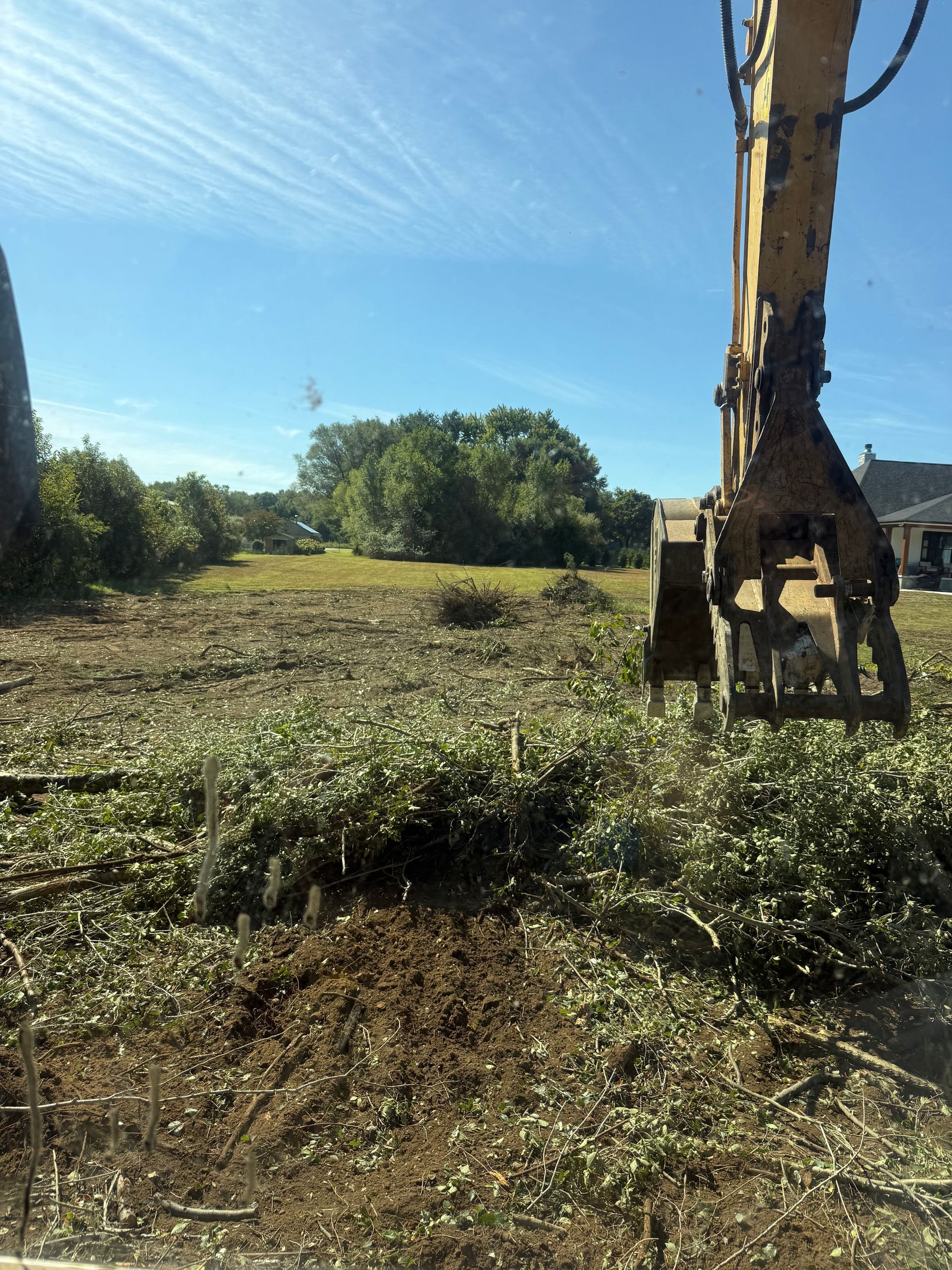
After the mulching pass is complete, the cleared area shows an even layer of processed material at ground level with no standing brush, stumps above grade, or loose debris piles requiring secondary handling. The root systems of smaller-diameter vegetation are typically disrupted enough that regrowth is suppressed, though larger tree stumps may require dedicated grinding depending on diameter and species. You'll be able to walk the full cleared area immediately after the equipment completes its pass—a visible confirmation of what the machine covered versus what remains.
Forestry mulching is most cost-effective on properties with moderate to heavy brush density across at least a half-acre—on smaller parcels with light vegetation, the equipment mobilization cost relative to scope may favor hand clearing or conventional methods instead. That trade-off is assessed during the initial site evaluation rather than assumed in advance.
Questions Before Starting Your Project
Property owners in Millville and the surrounding shore communities typically have questions about how forestry mulching differs from conventional clearing and what the finished result will look like for their specific lot.
What diameter trees can the forestry mulching equipment process?
The mulching grinder handles trees and brush up to a certain diameter depending on the specific machine configuration—larger-diameter trees may be felled separately and processed in sections before the mulching pass covers the remaining brush and smaller material.
How does the mulch product affect future site development?
Mulch left on-site decomposes over time and is compatible with seeding or planting plans, but development projects that require compacted subgrade work typically need the mulch layer removed or incorporated before grading begins.
Why is single-pass mulching particularly efficient on shore-area lots in Millville?
Shore-region properties often have dense understory growth and sandy soils—conventional haul-off on these lots generates high debris volumes while equipment access can be limited, making on-site processing a practical match for local conditions.
How long does a typical forestry mulching job take per acre?
A one-acre clearing typically requires two to three days depending on vegetation density—heavier concentrations of mature brush extend the timeline, while more open lots with scattered vegetation move faster.
What site conditions affect whether forestry mulching is the right approach?
Slope, soil stability, access width for equipment entry, and the required finish condition of the site all factor into whether mulching is the optimal clearing method or whether a combination of approaches better fits the scope.
JMJ Contracting handles forestry mulching as part of a complete land clearing scope—properties that also need grading, brush hogging, or tree removal can have that work coordinated under the same project plan. Speak with JMJ Contracting directly to review your lot's vegetation profile and confirm which approach fits your clearing objectives.